
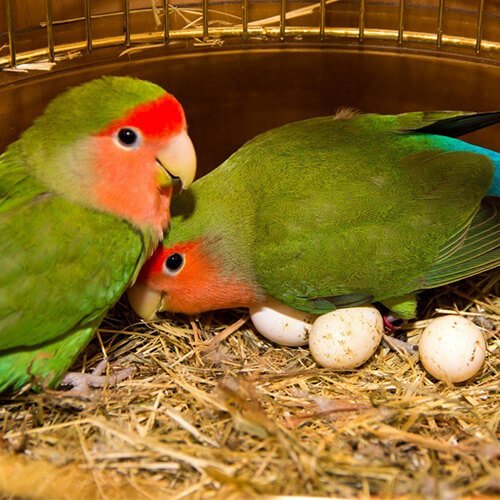
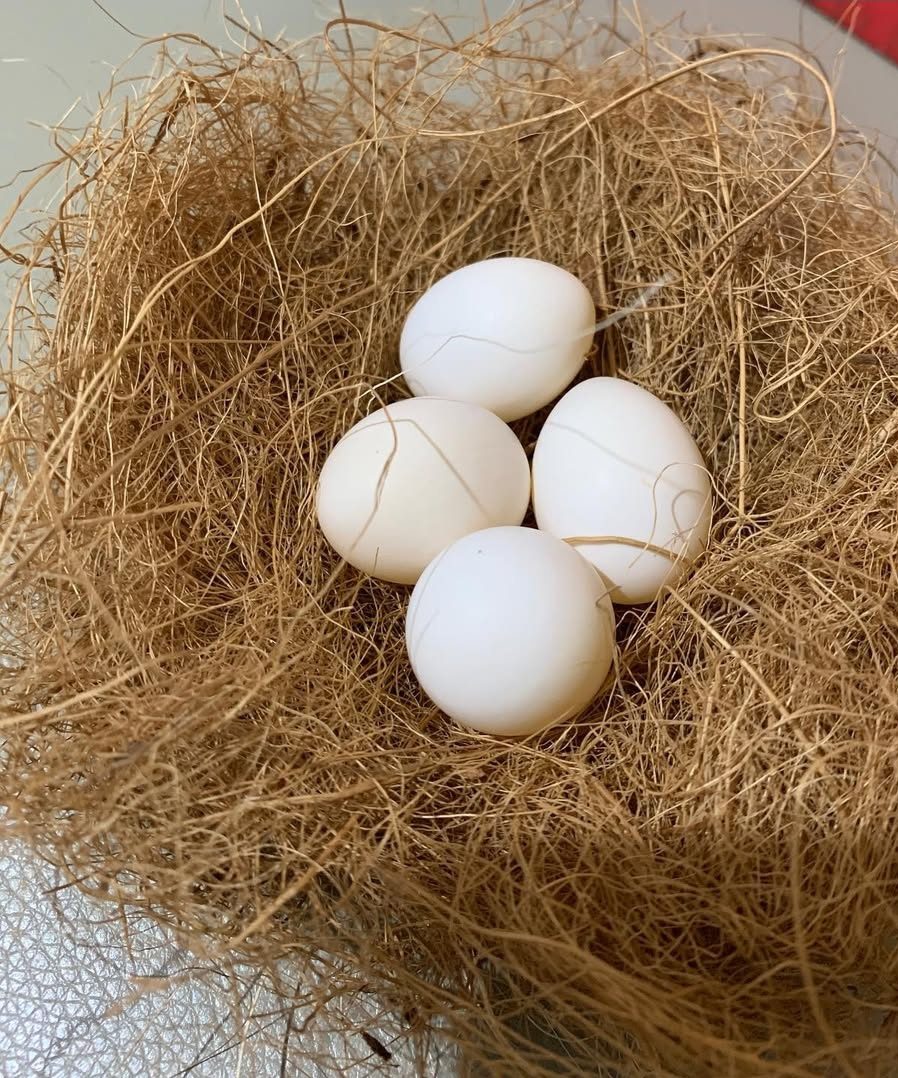
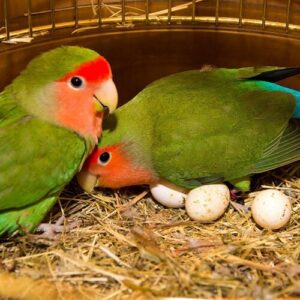
Lovebird parrot eggs for sale are small, oval-shaped eggs with a smooth, hard shell that is typically pure white. A healthy lovebird egg measures about 1.8–2.2 cm (0.7–0.9 inches) in length and weighs approximately 3–5 grams. The shell protects the developing chick while allowing oxygen to pass through tiny pores.
White, oval-shaped eggs laid by female lovebirds during the breeding season. Healthy eggs are a sign that the birds are mature, well-nourished, and kept in a suitable breeding environment. Whether you’re a breeder or a pet owner, understanding how lovebird eggs develop and how to care for them is essential for successful hatching.
Lovebird eggs typically measure 22–25 mm (0.9–1 inch) in length and have a smooth, glossy white shell. A healthy female usually lays 4 to 6 eggs per clutch, although some may lay as few as 3 or as many as 8 eggs.
The female generally lays one egg every other day. Incubation usually begins after the second or third egg is laid and lasts approximately 21–24 days. During this time, the female spends most of her time sitting on the eggs while the male feeds and protects her.
FAQs About Lovebird Parrot Eggs
How many eggs does a lovebird lay at one time?
A female lovebird typically lays 4 to 6 eggs in a single clutch.
How long do lovebird eggs take to hatch?
Lovebird eggs usually hatch after 21 to 24 days of incubation.
How can I tell if a lovebird egg is fertile?
A fertile egg can be checked by candling after 7–10 days. You should see blood vessels or a developing embryo inside.
Why aren’t my lovebird eggs hatching?
Possible reasons include infertility, improper incubation temperature or humidity, poor nutrition, or the parents abandoning the nest.
Should I touch lovebird eggs?
It’s best to avoid handling them unless necessary. Excessive handling can stress the parents and increase the risk of damage.
Do both parents incubate the eggs?
The female performs most of the incubation, while the male usually feeds and protects her.
What temperature is best for incubating lovebird eggs?
Artificial incubation generally requires a temperature of 99.3–99.5°F (37.4–37.5°C) with appropriate humidity, but natural incubation by the parents is preferred whenever possible.
How often does a female lovebird lay eggs?
During the breeding season, she lays one egg every 1–2 days until the clutch is complete.
Can infertile lovebird eggs hatch?
No. Infertile eggs do not contain a developing embryo and will never hatch.
What should I feed breeding lovebirds?
Provide a balanced diet including high-quality pellets or seed mix, fresh vegetables, fruits, sprouted seeds, cuttlebone, mineral blocks, and calcium supplements.
When should I candle lovebird eggs?
The ideal time is 7–10 days after the egg is laid to check for fertility.
Can lovebird eggs hatch without the mother?
Yes, but only if they are placed in a properly calibrated incubator that maintains the correct temperature, humidity, and egg-turning schedule.
What happens if an egg cracks?
A cracked egg is less likely to hatch because bacteria can enter through the shell and moisture can escape. Minor cracks may sometimes be repaired by experienced breeders, but success is not guaranteed.
How long can a lovebird egg survive without warmth?
Developing eggs should not be left without proper warmth for extended periods. Brief cooling is usually tolerated, but prolonged exposure can stop embryo development.
Why is calcium important for breeding lovebirds?
Calcium helps produce strong eggshells and supports the female’s health during egg production. Cuttlebone, mineral blocks, and calcium-rich foods are excellent sources.

Abigail Watson –
The website information was useful and the ordering process was easy to follow. Overall, a positive experience.
Matthew Hughes –
I was happy with the communication and condition of the order on arrival. It was a pleasant purchasing experience.
Emily Sullivan –
The instructions and product information were useful for a first-time buyer. I would consider ordering again.
Michael Collins –
The order process was simple and the support team was responsive. Overall, a positive experience.
Ella Stewart –
product arrived well packaged. The updates during the order were appreciated