
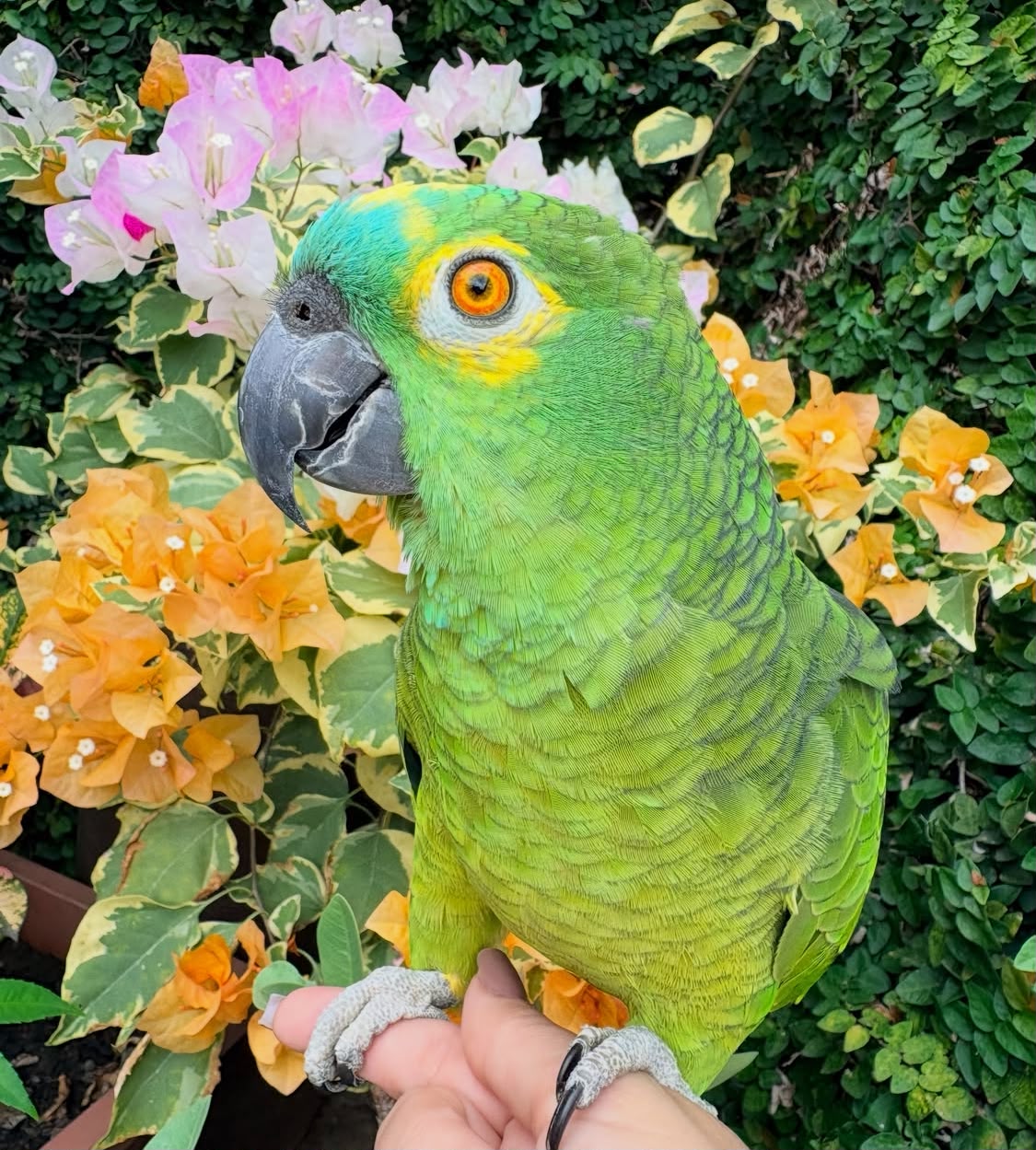
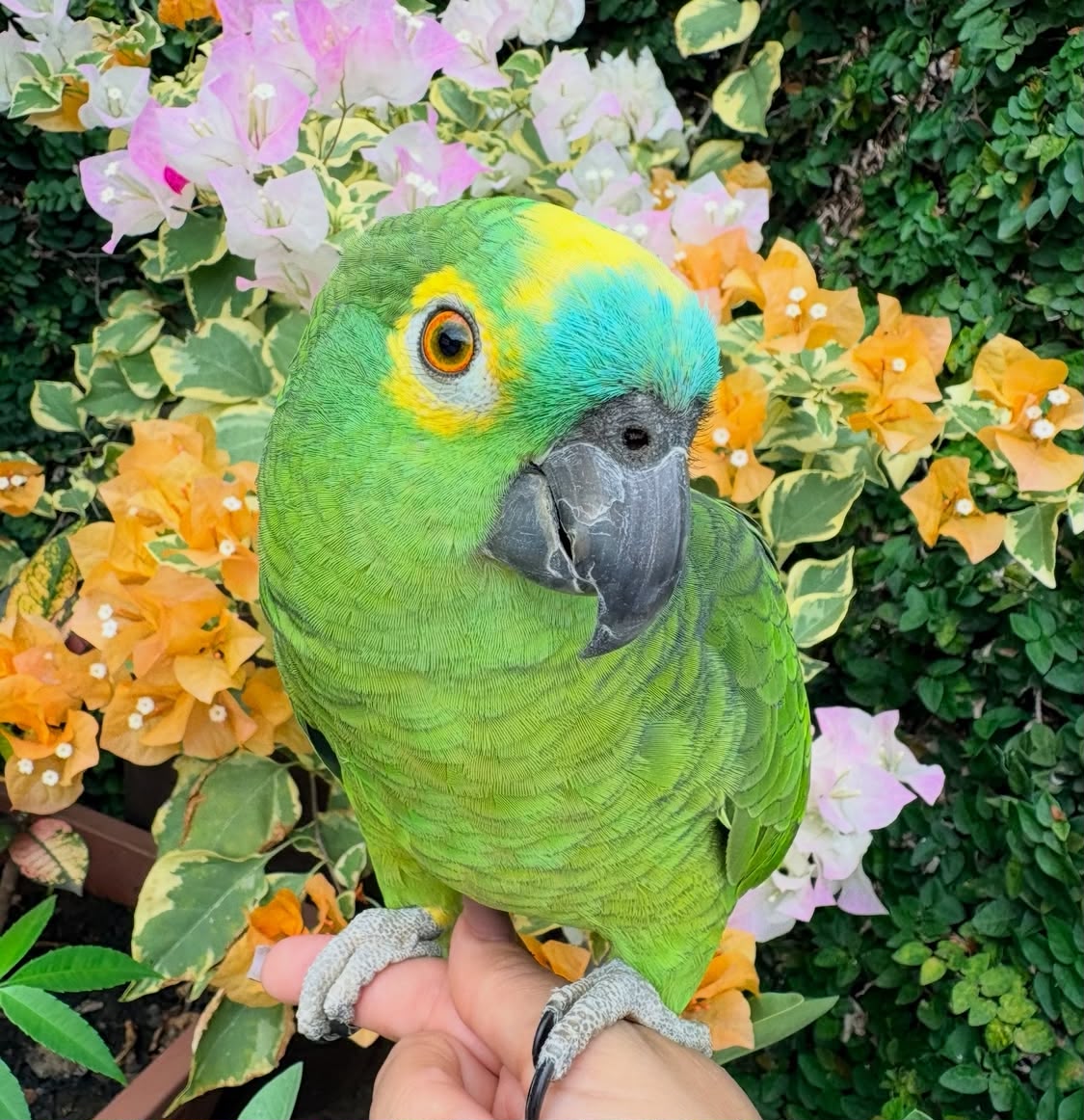
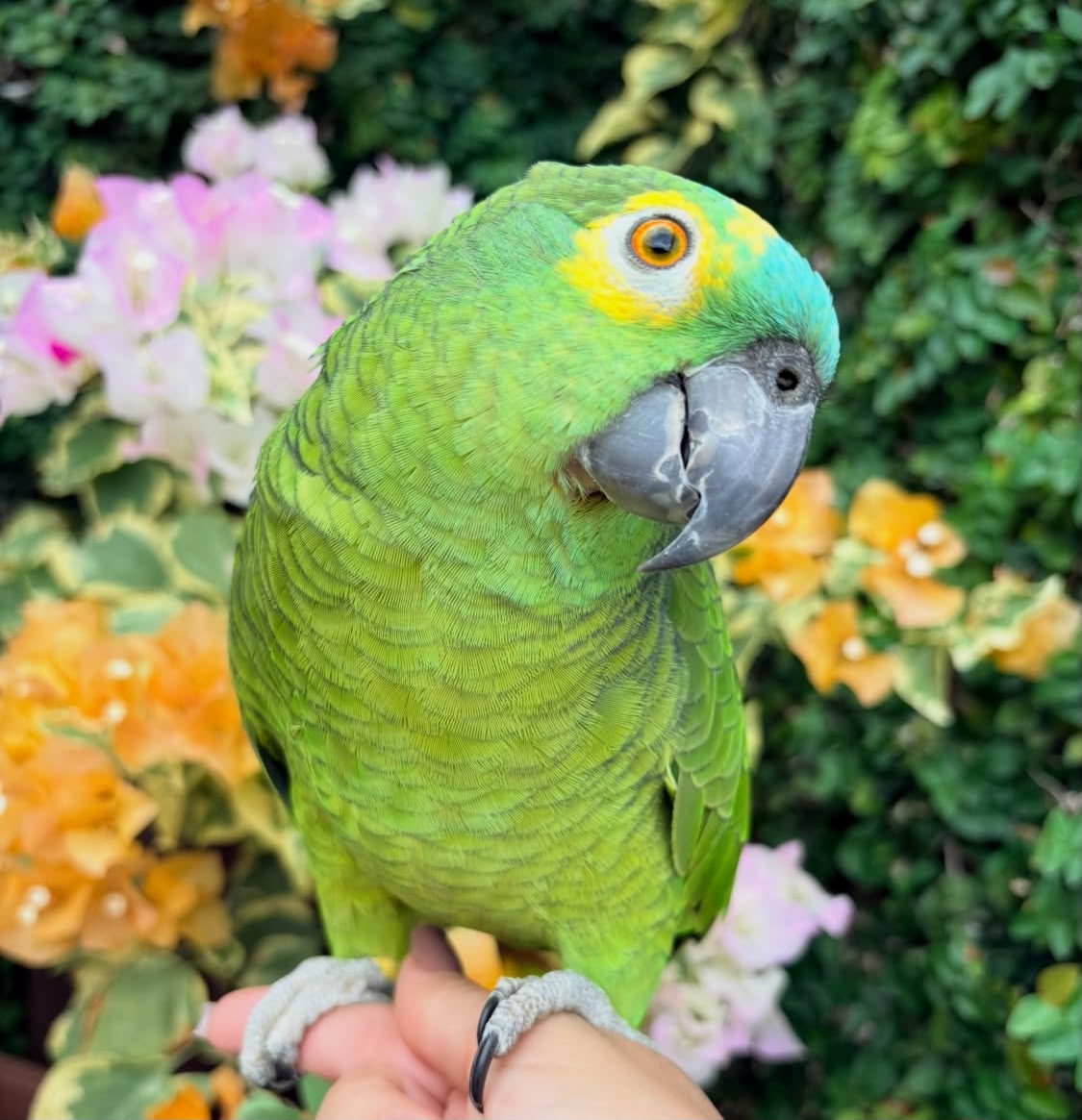
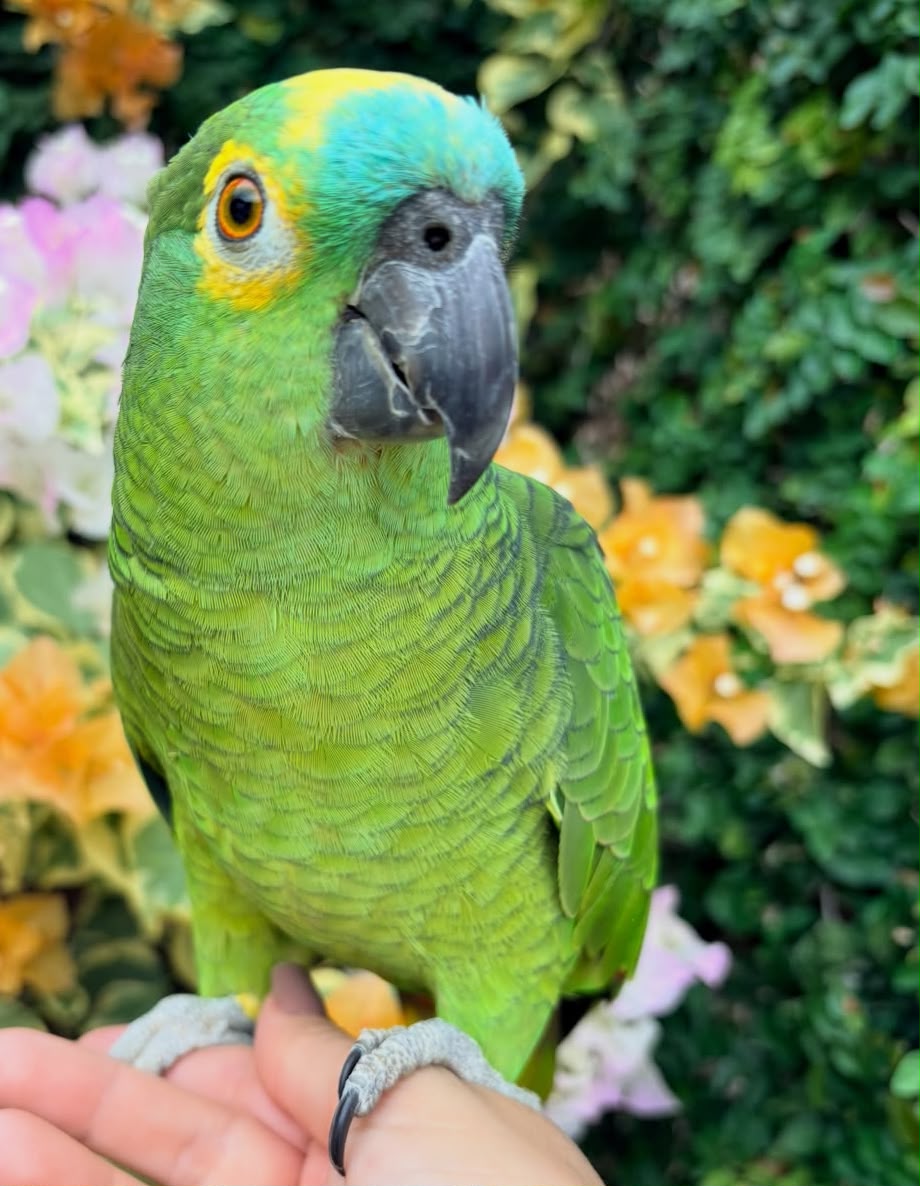
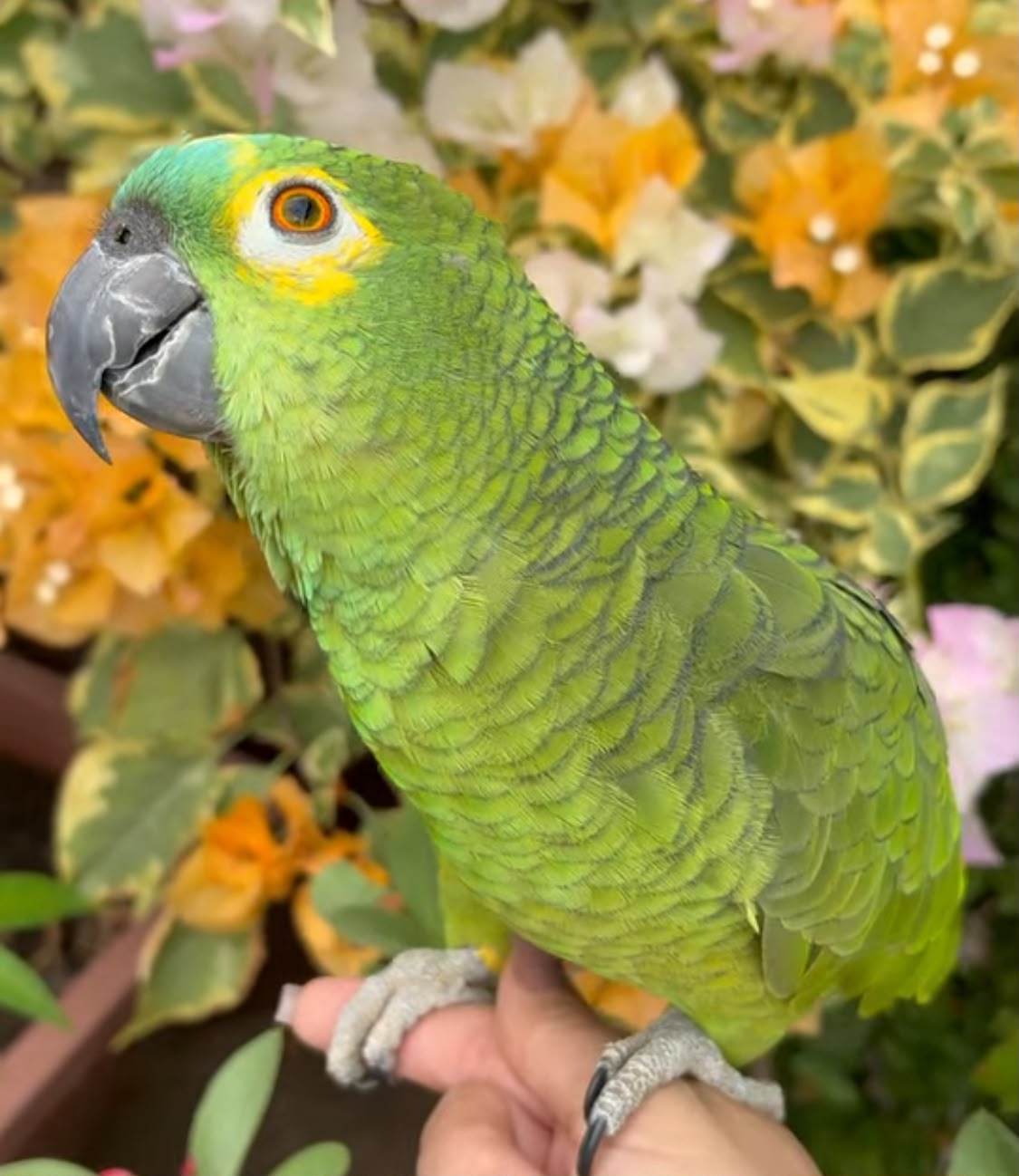
Amazon parrot for sale typically play hard. An Amazon parrot might swing upside down from the cage, delight in destroying their wooden toys and even wrestle their owner’s hand with their beak.
An Amazon parrot’s mood is one of the easiest to read among parrot species because it is excellent at expressing itself through its body language: pinning eyes, raised head/neck feathers, fanned tail feathers and broad stance, for example, indicates a highly excitable Amazon parrot.
An Amazon owner should pay close attention to his or her Amazon parrot’s body language to be fully attuned to the bird’s mood. An excitable Amazon parrot might be telling you that it doesn’t wish to be handled, and failure to recognize this might result in a bite.
An Amazon parrot can also go into “play overload” during play, especially when beak wrestling with you. Stop the play session to give your Amazon parrot time to calm down as soon as you see overly excited body language. Male Amazon parrots, especially male double-yellow-headed Amazons, yellow-naped Amazons and Blue-fronted Amazons are said to be more aggressive than females of their species.
Speech & Sound Of Amazon Parrots
Amazon parrots are one of the better talkers of the parrot world. They seem to be especially fond of music and singing. An Amazon could careless if the song it sings is off-key; it will sing as if it wrote the sing itself. Amazons can learn to speak a many words and phrases and imitate sounds. An Amazon parrot can also be noisy, especially when it wants attention. It can scream loudly and some make a repetitive honk-like sound when they want something. Some Amazons make a little shrill sound to express delight while they eat a favorite treat.
Health & Common Conditions
Amazon parrots are prone to becoming obese, which is why owners should pay attention to the amount and types of food offered daily. Other diseases/conditions that affect Amazon parrots include: Polyomavirus (can cause anorexia, lethargy, weight loss, death); Chlamydiosis (signs include low appetite, fluffed feathers, nasal discharge) and vitamin-A deficiency if fed an inadequate diet.
Get an Amazon Parrot
Amazon parrots are typically available in avian-specialty stores and from bird breeders. They are also frequently available for adoption from an avian rescue organization. If you are adopting an Amazon parrot, be sure to ask why the bird was given up for adoption and if it has any behavioral issues.
Amazon parrots commonly kept as pets include the Double Yellow Headed Amazon, or Yellow Crowned Amazonue-fronted Amazon (Amazona aestiva); Yellow Naped Amazon (Amazona auropalliata); lilac-crowned Amazon (Amazona finschi); the orange-winged Amazon (Amazona amazonica); white-fronted Amazon (Amazona albifrons); Mealy Amazon (Amazona farinosa).
Frequently Asked Questions About Amazon Parrots
What is an Amazon parrot?
An Amazon parrot is a medium to large parrot native to Central America, South America, and the Caribbean. They are known for their bright green feathers, intelligence, and excellent talking ability.
How long do Amazon parrots live?
With proper care, an Amazon parrot can live between 40 and 60 years, and some may live even longer.
Are Amazon parrots good pets?
Yes. Amazon parrots can make wonderful pets for experienced bird owners because they are affectionate, social, and highly intelligent. They require daily interaction and mental stimulation.
Can Amazon parrots talk?
Yes. Amazon parrots are among the best talking bird species. Many can learn dozens of words and phrases and often imitate sounds with remarkable clarity.
How big do Amazon parrots get?
Most Amazon parrots grow to 10–18 inches (25–45 cm) in length and weigh 300–700 grams, depending on the species.
What do Amazon parrots eat?
Their diet should include high-quality pellets, fresh fruits, vegetables, leafy greens, and a limited amount of healthy seeds and nuts. Fresh water should always be available.
Are Amazon parrots noisy?
Yes. Amazon parrots are naturally vocal and can be quite loud, especially in the morning and evening.
Do Amazon parrots need a large cage?
Yes. They need a spacious cage that allows them to spread their wings comfortably, along with plenty of toys and perches for exercise and enrichment.
How much exercise does an Amazon parrot need?
Amazon parrots should have at least 2–4 hours of supervised out-of-cage time each day to stay healthy and mentally stimulated.
Are Amazon parrots easy to train?
Yes. They respond well to positive reinforcement and can learn tricks, commands, and speech with consistent training.

James Harris –
The item arrived securely packaged and in good condition. The updates during the order were appreciated.
Avery Richardson –
I appreciated the detailed information provided before ordering. The updates during the order were appreciated.
Madison Kelly –
The experience was smooth from checkout through delivery. It was a pleasant purchasing experience.
Matthew Anderson –
The order process was simple and the support team was responsive. The updates during the order were appreciated.
Alexander Bailey –
The product was as described and the overall experience was positive. It was a pleasant purchasing experience.